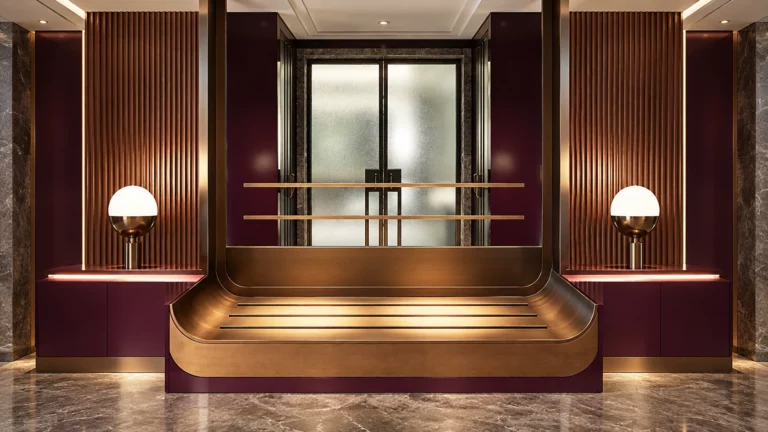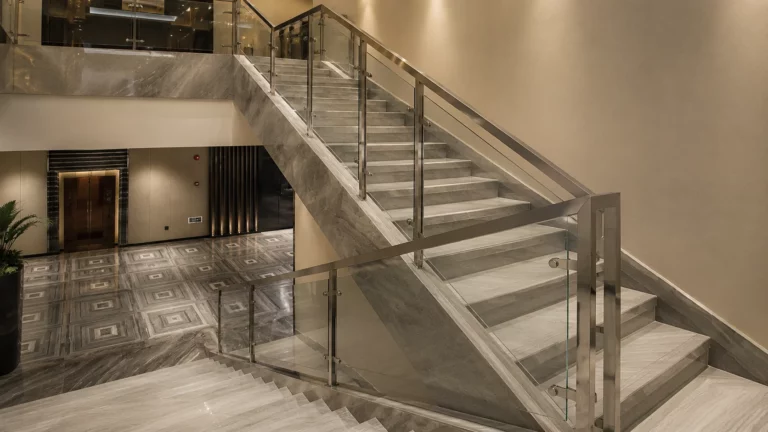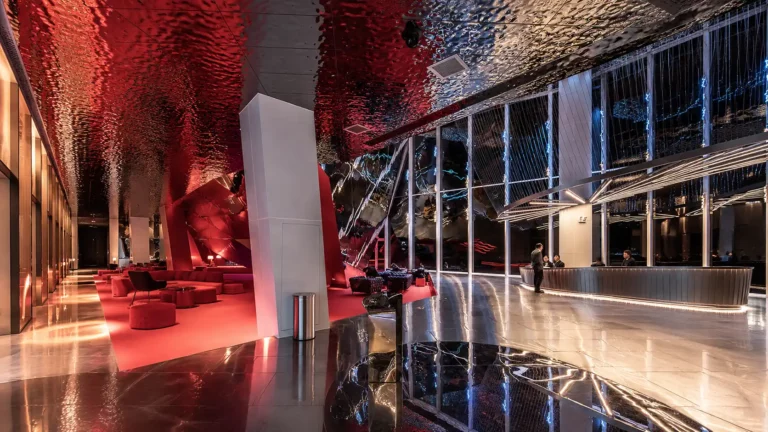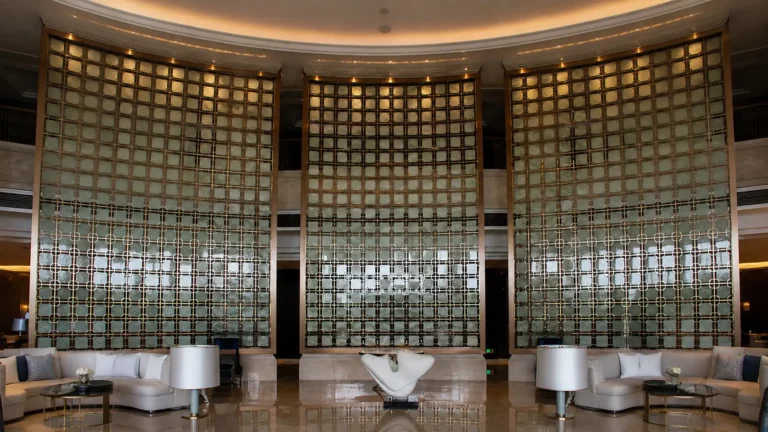


The interior parts of the elevator are subjected to constant motion, handling, humidity, dirt, and aesthetic standards. The wall paneling, doors, ceiling, railings, and control panel trim are supposed to be reliable and contribute to the visual identification of the building. These qualities are provided by stainless steel.
Understanding Stainless Steel
Definition and Composition
The stainless steel is an alloy made from iron metal which has a minimum content of 10.5% chromium. The chromium acts in reaction with the oxygen in the atmosphere to form a protective coating against rust, staining and chemical action.
These grades are used extensively in architecture. Grade 304 is suitable for almost all indoor elevators whereas grade 316 shows greater resistance to corrosion in coastal or chloride-exposed locations.
Key Properties That Make Stainless Steel Unique
Коррозионная стойкость
The presence of the chromium oxide layer makes the surface of the panels corrosion resistant against water, fingermarks, cleaning solutions, and other indoor pollutants.
Strength and Durability
The stainless steel is impact resistant and durable against deformation and abrasions. The right sheet or panel is selected to preserve its form and usability.
Эстетическая привлекательность
There are a number of different finishes available, which can support both a more restrained and a more expressive design. Brushed, satin, mirror, etched, embossed, vibration, sandblasted and colored finishes are all available.
Hygiene and Cleanliness
The smooth, non-porous surface of the sheet does not absorb moisture or dirt, and thus is easily cleaned and will withstand the wear and tear of high-traffic applications.
Corrosion Resistance in Elevator Interiors
Elevators and Indoor Environments
Even if the elevator enclosure itself is closed off, the surface of the enclosure will be subjected to elements like moisture, sweating, spills, cleaners, and salt particles in the air.
Metal surfaces can become discolored, corroded, or lose their coating if they are not sufficiently resistant to corrosion.
The Stainless Steel Advantage
Stainless steel need not rely totally on paint or the application of an ephemeral film as means of protection. This protective film occurs naturally in the behavior of the alloy, thus stainless can be applied in doors, walls, trimmings, skirting, jambs, and handrails.
304 stainless is commonly utilized in ordinary interior use. 316 stainless is normally advised for use where there are coastal locations, health care uses, or potential contact with chlorides.
A Comparison With Other Materials
In contrast to painted, laminated or porous surfaces stainless steel has:
- Does not swell or warp due to normal indoor moisture.
- Tolerates frequent cleaning and disinfection
- Such wood items can be re finished rather than replace completely.
- Aesthetics remain consistent over long service periods.
Strength and Durability
A Strong Foundation
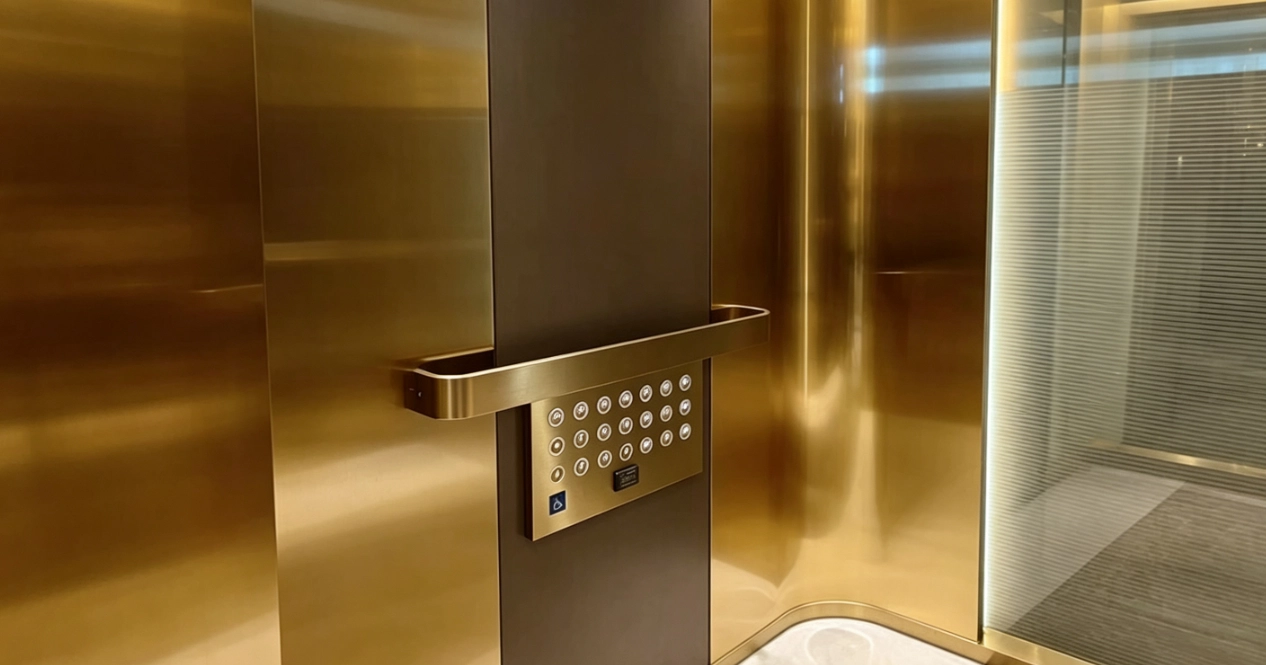
Elevators transport passengers, luggage, shopping carts, equipment and delivered goods. Therefore, in addition to design aspects, their interior must be equipped with a sturdy base for the wall system, door panels, ceiling elements, handrails and protective corners of stainless steel.
Sheet thickness, backing construction, method of fixing and edge treatment all need to be co-ordinated to prevent vibration and local deformation.
Resisting Physical Damage and Wear
Brushed and textured finishes hide finger prints and minor scratches best. Embossed or patterned surfaces then also hide wear best in service in public buildings, in public areas like restaurants, hotels and offices and in general commercial buildings and in service elevators.
Fabrication, transportation and installation should occur with the protective film still applied to the glass to prevent contamination and damage from unintended scratching.
Longevity and Reduced Maintenance Costs
Durable elevator materials lower lifecycle costs by reducing repair, refinishing, and replacement frequency. Stainless steel may cost more initially than some alternatives, but long service life and limited maintenance can improve total project value.
Modular panels allow for selective replacement without having to rebuild the whole interior.
Эстетическая привлекательность
The Role of Aesthetics in Elevator Design
The elevator car is a component of the arrival process inside the building. The material quality affects the feelings of cleanliness, safety, comfort, and property value. The interiors of the elevators are an extension of the style created in the lobby and corridor spaces.
Stainless Steel’s Timeless and Modern Look
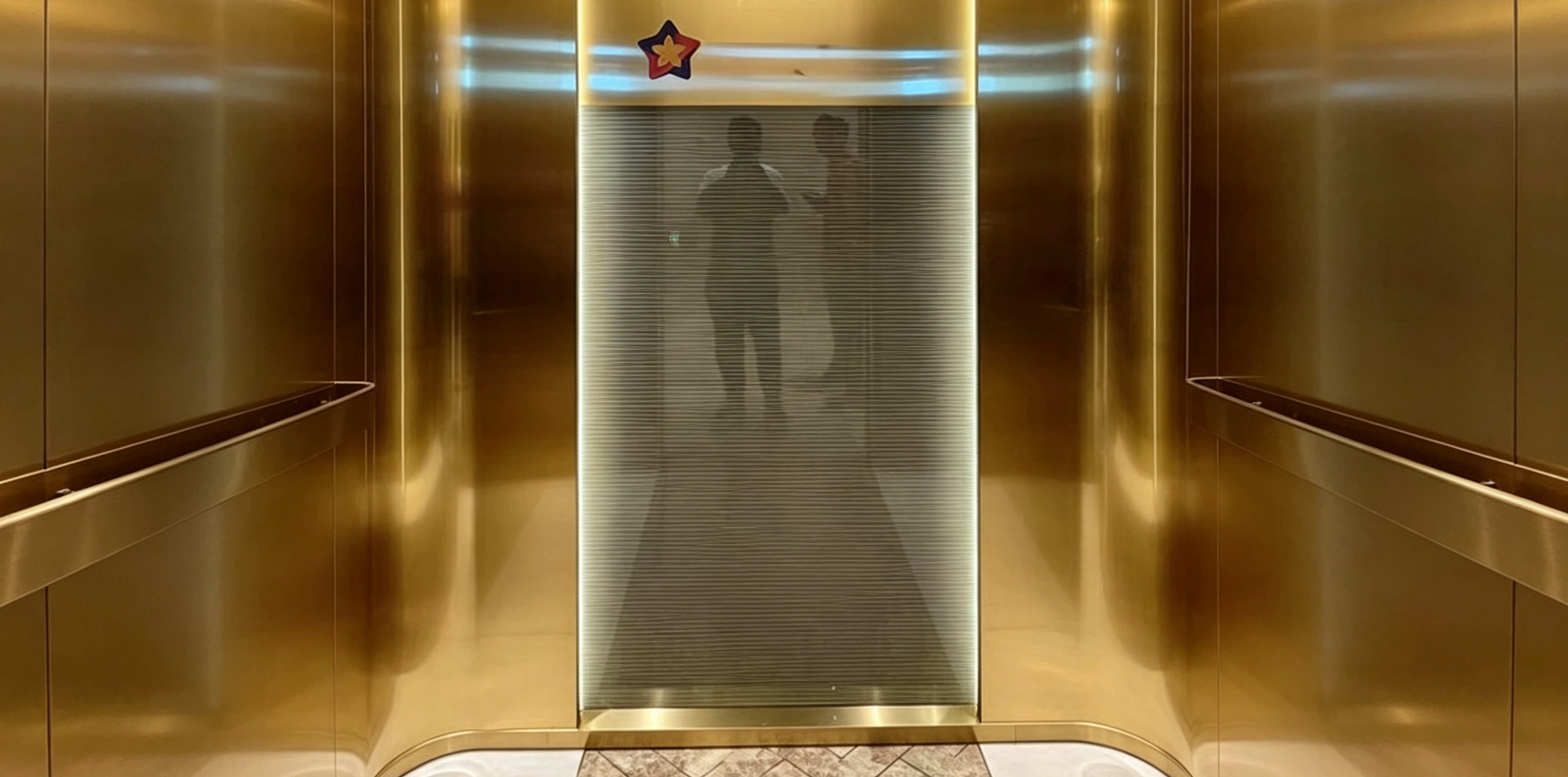
Stainless steel has a neutral metallic character that works with stone, glass, timber, and architectural lighting. Satin and brushed surfaces create a restrained appearance, while mirror finishes increase brightness and the perception of space.
Colored PVD finishes can introduce champagne, bronze, gold, black, and other metallic tones. Directional grains, patterned reflections, and etched details add visual depth.
Параметры настройки
Decorative stainless steel supports:
- Custom sheet sizes and panel modules
- Brushed, satin, mirror, vibration, and sandblasted finishes
- Etched graphics, patterns, logos, and wayfinding elements
- Embossed, hammered, corrugated, or water-ripple textures
- PVD colors and anti-fingerprint treatments
- Integrated lighting, ventilation, handrails, and control-panel details
- Flat, folded, curved, or special-shaped components
Finished samples and mock-ups enable verification of color, reflectivity, grain direction, joint configuration and the way a floor will look under different lighting conditions before production begins.
Hygiene and Cleanliness
Elevators as High-Traffic Areas
Elevator pushbuttons, handrails, walls, and doors experience continuous touch. The use of cleanable surfaces is mandatory in hospitals, office buildings, hotels, schools, transportation terminals, and apartments.
Ease of Cleaning and Maintenance
Cleaning of stainless steel usually demands only mild detergents, fresh water, and soft cloths. Grain cleaning reduces the likelihood of staining, rinsing and wiping eliminates stains and water marks.
Steel wool and harsh cleansers with chlorides should never be used. Cleaning agents should be suitable for the specific grade and surface of stainless steel.
Suitability for Healthcare Settings
Non-porous stainless steel supports regular cleaning protocols. Rounded corners, sealed joints, minimal ledges, and carefully detailed interfaces can further improve cleanability.
Sustainability and Stainless Steel
Environmental Benefits of Stainless Steel
Longevity
Long service life reduces the frequency of replacements, use of new materials, transport and installation.
Minimal Maintenance
Durable surfaces require fewer layers of coating and less frequent refurbishment.
Recyclability
Used stainless steel can be recovered for recycling at end of service life, in addition to potential return to the recycling stream of fabrication scrap generated during manufacture of stainless steel products.
Sustainable Design Considerations
Optimizing the dimensions of the panels to be cut at the factory reduces the amount of waste produced in the cutting process. The modular nature of the solutions then facilitates any repairs needed, while having produced and distributed the accurate shop drawings to all involved in the production phase prevents any errors from being introduced in the course of the work.
Maintenance Tips for Stainless Steel Elevator Interiors
Cleaning and Care Guidelines
- Use a soft cloth to remove dust and fingerprints from your book on a regular basis.
- Use a neutral cleaner, diluted as instructed.
- Wipe in the direction of the grain.
- Rinse away residue with clean water.
- Dry the surface to prevent water spots.
Avoiding Common Issues and Stains
- Keep products that contain bleach or chloride based cleaners away from the surface.
- Remove acidic drinks, salts, and spills promptly.
- Avoid abrasive pads that alter the finish.
- Protect panels during nearby construction work.
- Use cleaners suitable for PVD surfaces and anti-fingerprint surfaces.
Заключение
Stainless steel is a versatile product that has many characteristics, such as performance, appearance, hygiene and sustainability. The corrosion resistant finish ensures that this product is ideal for indoor use and can withstand any conditions. It is strong enough to be used on a continuous basis and can be finished in a wide range of decorative finishes. It can be used in offices, hotels, health care facilities, public buildings and residential homes.
The final results will depend on a number of factors including the correct grade, the type of panel construction used, the finish, the method of fabrication, the installation details and the proposed maintenance.
Часто задаваемые вопросы
What Stainless Steel Grade Is Commonly Used for Elevator Interiors?
Grade 304 is typical for normal indoor applications. However Grade 316 could be used for coastal exposure or where there is a risk of chlorides.
Can Stainless Steel Elevator Panels Be Customized?
Yes. We manufacture panels in any size, shape, pattern, color, texture and edge profile. Also we can include lighting and functional details.
Is Stainless Steel a Sustainable Elevator Interior Material?
This product has a long service life, little need for maintenance, can be recovered and is fully recyclable. This makes it suitable for lifecycle design and circular design.
Partner With a Global Stainless Steel Elevator Interior Manufacturer and Supplier
Иноксфурт Металл is a global supplier of stainless steel decorative products and custom made architectural metal items for interior and exterior use. Inoxfurt Metal is a Foshan China based company who supplies design support, engineering development, metal fabrication, surface finishes and online architectural technical support to customers all around the world.
Its manufacturing capabilities include laser cutting, shearing, grooving, welding, polishing, grinding, PVD coating, sandblasting, etching, brushed finishing, mirror finishing, and anti-fingerprint treatment. Custom stainless steel components can be developed in different sizes, patterns, shapes, colors, and surface finishes for elevator systems and other architectural applications.
Architects, interior designers, renovation companies, contractors and project owners can provide project drawings, material specifications, finish references, quantities and delivery terms in order to receive a customized offer for a manufacturing project. For project consultation, technical evaluation, or quotation requests, contact the Inoxfurt Metal team to discuss specific architectural metal manufacturing requirements.